Sunday, March 15, 2020

Special Edition #1: Temporary Remote Teaching


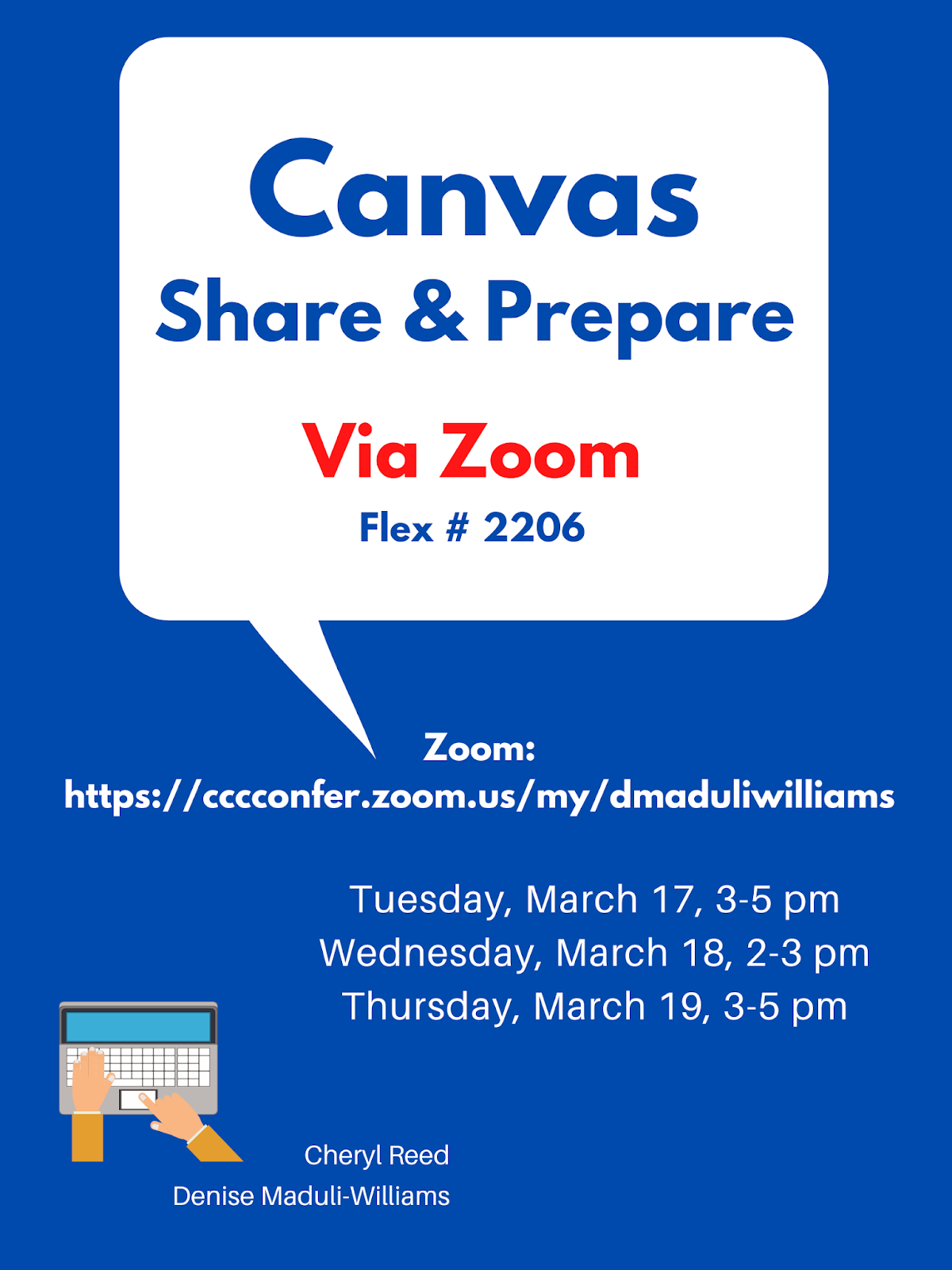
Upcoming Canvas Workshops



Resources

Reach out to the experts and colleagues in your department and discpline. There are many questions and issues that depend on what you teach.

A wonderful curated playlist of educators creating brief How-to Videos in support of remote teaching: Keep Teaching Playlist

Thinking about how to reproduce some of what you do in a face-to-face classroom to an online setting can be challenging. This table from Jim Julius, Director of Online Learning, MiraCosta College, includes specific ideas: Taking Classroom Activities Online


Temporary Remote Teaching

As we think about how to support students through temporary remote teaching, here are a few considerations:

1. Communication with students. Students are even more worried and stressed than we are, so be sure to let them know how they can reach you and how you will communicate with them. That could be through email, Canvas inbox, or other apps that you may have already set up (ProntoRemindetc.). If you are meeting students still, this is the number one priority - how can they communicate with you (and you them) not for compliance, but because you care.

2. Canvas. Using Canvas is not mandatory, but all of us already have Canvas shells provided for us for our F2F classes. You can quickly set yours up to at least be able to hold discussions and/or send announcements. Just be sure to publish your course. There are many tutorials below:

How to Log in to your Canvas shell:
  • URL: http://sdccd.instructure.com
  • USERNAME: 10-Digit Employee ID
  • PASSWORD: 8-DIGIT BIRTHDATE (MMDDYYYY)

3. Zoom. Zoom is available to all of us for video conferencing (live or recorded). BE sure to use your SDCCD email to create a Pro account.
4. Youtube. In addition to using Youtube to upload videos you create, you can also create an account and then curate existing videos into a playlist to share with students. 
5. Other technology tools. There are variety of tech tools that can support the interaction, engagement, learning, and assessment in online spaces. Some that have been highlighted on this blog in past posts include:
  • VoiceThread
  • Flipgrid
  • Hypothesis
  • AnswerGarden
  • Padlet
  • Google Suite (Docs, Sites, etc.)
  • Adobe Spark Suite (Posts, Pages, Video)
  • Perusall
Many of you are already using some or all of these. However, it's not the time to overwhelm yourself or students with a bunch of new tools. If you want to try one, fine, but also don't feel obligated to.


Be kind, be flexible, be patient.

Tuesday, March 10, 2020

Helpful Resources to Keep Teaching


Excellent resources from CVC-OEI Online Network of Educators on How to Keep Teaching During an Emergency. They include straightforward things we can do to keep communicating, teaching, and assessing students.


Our SDCCD Canvas Shell of Resources and Training Materials for Online and Web-enhanced Teaching


From the Chronicle of Higher Education: Going Online in a Hurry: What to Do and Where to Start?


Spring 2020 Canvas Institute


ZOOM Sessions:  All listed workshops will be held online via Zoom. Zoom URL https://cccconfer.zoom.us/my/dgiberson
By Popular Demand:
Date
Time
College
Cont. Ed
Topic
Presenter
3/12/2020
2-4 pm
Flex #2176
Flex #11464
Intro to Canvas and Canvas Q&A
Dave Giberson
3/17/2020
9-11am
Flex #2177
Flex #11465
Intro to Canvas and Canvas Q&A
Dave Giberson
3/20/2020
10am-12 pm
Flex #2178
Flex #11466
Intro to Canvas and Canvas Q&A
Dave Giberson

Monday, March 9, 2020

Week 6, Spring 2020


Canvas Hack: Continuity of Instruction

Emergency Preparedness & Online Learning

Resolution-Miramar Distance Education Committee:

The Centers for Disease Control (CDC) recently urged schools and other public institutions to begin making plans for "teleschool" in case there is a nationwide spread of coronavirus that leads to school closures. The Miramar Distance Education Committee encourages all faculty (even those teaching on-campus classes) to consider how they can use the features of Canvas and other online tools to provide students with ongoing access to course materials as a general preparedness measure.


To be clear: We're talking here about how classes can engage in "temporary remote teaching" where applicable. We aren't talking about any classes magically becoming Distance Education courses or about suspending online teaching certification. However, the CDC has asked schools to consider how they might use online tools to provide "continuity of instruction" should school closures or individual student quarantines become necessary.

How can we maintain discussions with our students and continue applicable coursework remotely for a short, temporary period of time during a public health situation? 


To go to last week's post with many ideas for using Canvas including a variety of tutorials: Week 5 Canvas Hack


OER Resources

Angela Boyd, Miramar Librarian


Are you interested in trying out an OER textbook for your class? Maybe you would like to see the latest that is out there for your subject area. 


  • The University of North Georgia is giving away print copies of approximately 30 titles that are free to you if you request a review copy. The subjects range from accounting to literature to warfare. Digital copies are freely available on their website: North Georgia Textbooks and OERs  
  • Bookstores, libraries, schools and educators, museums, stores and gift shops, book bloggers, book review programs are all eligible to receive a review copy. To order one, please go to this site: Request a Review Copy 

As always, if you have any questions about OER/ZTC materials, please come see me in the library or or give me a holler at 619-388-7310.

Links and Resources


Pronto is now available at no cost to faculty in an effort to allow teachers and students to stay connected while they work from home. (I've been using Pronto this semester to stay in touch with students and they love it).

They aren't the only company, there's a growing list of EdTech Companies offering FREE subscriptions during closure.

It's not as simple as "flipping a switch," Learning in a Pandemic Part 1 and Part 2.

On a positive note, in this Inside Higher Ed article, "Quiet Power," by Karen Costa explains how online learning benefits introverted students.

Monday, March 2, 2020

Week 5, Spring 2020

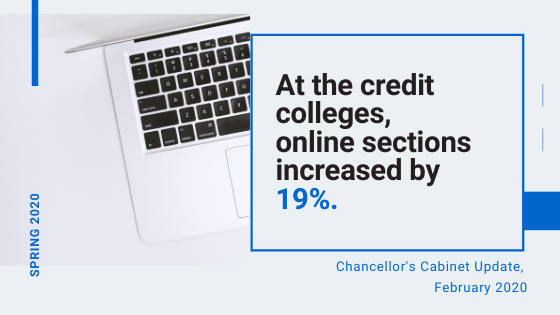
SDCCD Chancellor's Cabinet Update, February 2020

Canvas Hacks: Coronavirus


Well, not only is it flu season--the Centers for Disease Control (CDC) just this week urged schools to begin making plans for "teleschool" in case there is a nationwide spread of coronavirus that leads to school closures. In fact, local San Diego K-12 is currently contacting parents about preparedness measures.


We should talk.

Our fully online students are in a sweet spot: if school closes or if they need to quarantine, they have all the materials they need right there online. Read, view, learn, submit, get feedback!

The trick comes in covering classes that are set up to meet in person. Can we use Canvas and other online tools to provide students with ongoing access to course materials if we have to, er, step away from campus for a bit?

Here are some ways we can start right now to use Canvas for possible "away missions," even for in-person classes:
  • Store material such as links, videos, handouts, and quizzes in your Canvas shell or other LMS, including things you're currently planning to use in person. You want students to be able to access your materials if you're not there! [You can publish/unpublish individual items at will so you don't give away any secrets before you want to.]
  • Use the Discussion Board & peer replies to achieve a virtual class discussion.
  • Use Modules and Pages to create short written versions of key concepts.
  • Use Announcements to contact your students. Since these go out as emails as well as being stored on the class site, you can use also these to introduce the concepts for the day/week. So far, I haven't hit the limit on length, but I'd opt for several shorter messages over one long one. Just sayin'. The students are reading these on their phones!
  • Upload screenshots and still images to illustrate concepts you'd normally demonstrate in person.
  • Show students now how to upload assignments electronically. (If you haven't already, set up assignment instructions and submission links in your Canvas shell to test them out, even if you usually grade with pen and ink.)
  • Set up a free Zoom PRO account @ https://cccconfer.zoom.us/ so you can connect with students in real-time. Try a Zoom session with them now so you know it will work when you're off campus.
  • If you're familiar with filming & posting to social media, consider creating short screencasts or videos of some of your usual lecture/instruction materials.
Yes, these don't cover every possible classroom interaction, especially in classes that require hands-on activities. But they're a start, we can do them a bit at a time now, and they can help us get through any sudden absences. Denise and I recently found that out when we were called into jury duty!

Canvas tutorials for instructors: 
Canvas tutorials for students:

Guest Blogger: 


Mary Klann
Lecturer, History Department

Collaborative Annotation with Hypothesis

Hypothesis is one of my favorite tools available for encouraging students to engage thoughtfully with course readings and with each other. I’ve used Hypothesis in face-to-face classes since Spring 2018. When I started teaching online last semester (Fall 2019), I made it a key piece of each module.

How it works:
Hypothesis is an open-source annotation tool which allows students to annotate any text on the web. Students can attach text comments, photos, or videos to highlighted words or phrases in course readings. As an instructor, Hypothesis provides a way for me to actually see how students are taking notes. Additionally, all members of the class can engage with each other’s notes by replying to comments.  

Why collaborative annotation?
Before integrating Hypothesis into my courses, I utilized weekly reading quizzes. I was never completely happy with these assignments because I didn’t feel as though they were the best gauge for assessing student’s comprehension of and engagement with the course readings. I’ve found reading annotations to be more fluid and flexible in terms of what students can actually get out of course readings. The best things I’ve found?

  • Students learn how to take notes! Because I can see their annotations, I can give individual feedback. I didn’t learn how to effectively annotate assigned course readings until I was in graduate school. This is a valuable skill, and one that requires practice.
  • Students can talk to each other about the course readings. They can ask and answer questions of other students. Thus, in online courses, Hypothesis helps to build community by facilitating student-to-student communication.
  • And, students get credit, just for taking notes! No more creating reading quizzes for me, no more stress of taking quizzes for them. Because annotating readings is about practicing the skills of analysis and written communication, it isn’t really about getting quiz questions “right” or “wrong,” which I find encourages students to engage more thoughtfully and deeply with the material.

What to annotate?
In order to get students thinking about what they should be writing in their annotations, I always provide a brief “Reading Guide” with questions they can answer. I also instruct them that they won’t receive credit for one-word annotations like, “Interesting,” or “Shocking!” For example, in my HIST 109 (US History to 1877) course, students just read John Winthrop’s “city on a hill” sermon from 1630. The reading guide to this source included questions such as, “What did Winthrop believe to be British settlers’ mission in New England?” and “How does Winthrop believe society is regulated by religion?” When they stop to consider a particular phrase or sentence and how it helps them answer the questions in the Reading Guide, they begin to analyze the source itself.

Here is a brief orientation video for Hypothesis that I posted for my online course, to see how Hypothesis works with Canvas: https://www.youtube.com/watch?v=mY4y8A9OM1c.

Evaluating annotations:
In my online courses, students are required to annotate 3 brief readings per module. I only require one annotation per reading. However, students rarely annotate just once! As they become more comfortable with the tool, and depending on the source, I have seen quite in-depth analyses of these readings emerge, as well as conversations between multiple students about particular themes. In terms of grading, as long as the annotations are thoughtful (and longer than the one word exclamations I mentioned above), I award full points. The goal with this assignment is to get them reading, and more critically, get them engaging with the reading in a way that helps them to understand the themes from each module more deeply.

Two options for using Hypothesis:

Student create free accounts at hypothes.is:
Students can create free accounts through Hypothesis. They can download and install the Hypothesis app into their web browser, and after downloading a PDF or opening a link to a course reading, they can start annotating. Hypothesis also provides the option of creating private groups, which students can join. This ensures that annotations can’t been seen by anyone outside of your course. Students provide their username to me so I can evaluate them.

Hypothesis App in Canvas:
Hypothesis is currently offering their LMS app for free for testing and limited use (up to 50 students for one academic term). (They are in the process of implementing an LMS Pilot Program that will provide support for schools looking to adopt it.) If you choose this option, students do not have to create a separate Hypothesis account, as the tool will load right in Canvas. You can upload individual readings to each module, or create Assignments using Hypothesis where you can give students feedback through the Speed Grader.

One of my main goals for students in my class is that by the end of the course, they will be able to critically analyze a source and effectively communicate their arguments. Hypothesis is a great way for students for students to practice these skills over the course of the semester. You can learn more at https://web.hypothes.is/.

Join in on the HOOPLA!


If  you missed our first HOOPLA Workshop: Regular and Effective Contact, Instructor-to-Student, you can click here to access the workshops slides and activities: Regular and Effective Contact, Part 1 Resources

Head to the Flex site to sign up for upcoming HOOPLA Workshops:
  • Regular and Effective Contact, Part 2, Student-to-StudentFriday, March 20, Flex # 2134
  • Accessibility in your Canvas CourseFriday, April 17, Flex #2135
  • Canvas Gradebook: Tips and Drop-in Support, Friday, May 15, Flex 2136

All workshops are in L-102 from 9:00 am - 11:00 am

Links and Resources

If you have any bandwidth left for reading, here are two recent articles that caught my attention:

"What Counts for Proximity?" a timely article from Inside Higher Ed about working remotely and the question of proximity vs. engagement.

Monday, February 24, 2020

Week 4, Spring 2020

How do Course Design Features Influence Student Performance?


Welcome to Spring 2020!

After a short hiatus, we are back with all the usual information to support you in teaching online. If you have suggestions, ideas, and/or would like to be a guest blogger please email Denise Maduli-Williams, Online Teaching Mentor at dmaduliw@sdccd.edu


Canvas Hack: Enabling Personal Pronouns


Did you know there is a new feature on Canvas to add pronouns to a profile? Pronouns are then visible in your account profile, and after your name throughout Canvas.

For step-by-step directions, click here: Enable Personal Pronouns

Professional Learning Opportunities

HOOPLA (Hands-on Online Practical Learning Activities) Workshop Series. 

These workshops are designed to share ideas and activities to enhance your online, hybrid, and onground classes.

If you missed our first workshop, you can view the workshops site with slidedeck and resources here: Regular and Effective Contact, Part 1: Instructor-to-Student Interaction.

Head to the Flex site to sign up for the other upcoming workshops. Hope to see you there:


Canvas Institute Spring 2020

Dave Giberson is hosting an amazing series of Canvas workshops held online via Zoom. If you can't make it live, the workshops are all archived. Click here for the full schedule: Canvas Institute Schedule

Upcoming workshops include:
  • 1/29/2020, 2-4 pm, Flex # 1737, Grading in Canvas
  • 2/3/2020/ 10 am - 12 pm, Flex # 1738,  Accessibility in your Canvas Course
  • 2/7/2020, 9-11 am, Flex # 1739, Screencasting for Canvas


SPACES - Social Presence, Accessibility, Collaboration, Engagement for Students 


This self-paced online training series is hosted on Canvas and includes a variety of training modules that you can complete and earn badges on your own. 

Head to the Flex site to sign up:
  • Social Presence, Flex # 1230 
    • Clips App and Spark Stories
  • Accessibility, Flex # 1231 
    • Universal Design for Learning (UDL)
  • Collaboration, Flex # 1232 
    • Flipgrid and Discussion Board Strategies
  • Engagement, Flex # 1233 
    • Zoom for synchronous interaction &  asynchronous engagement
  • Student Tools, Flex # 1234 
    • Technology for Optimizing Online Learning for Students


Online Teaching Conference (OTC 2020)

June 17-19, 2020, Pasadena Convention Center

Register here: OTC 2020


The Online Teaching Conference (2020 will be its 20th year) is a unique face-to-face premier gathering of faculty, staff, and administrators leading the way in developing innovative and effective online education. As an inter-segmental conference focused on curriculum, pedagogy and technology to improve online instruction, learning, and student success, the Online Teaching Conference is an opportunity for educators to network with colleagues, connect, share knowledge, impart and receive best practices, and develop professionally.

Links and Resources


I just learned about the DoubleTake app which allows you to film simultaneous footage on your iPhone and I can't wait to level-up my videos. Here's a quick tutorial: Dual Lens Recording

These are all new to me: 6 Ed Tech Tools to Try in 2020

From the Chronicle of Higher Education, How to be a Better Online Teacher (Thank you Dean Ben Gamboa for sharing this!)

This handy Canvas Course Checklist may encourage you to try out something new.

From Faculty Focus, Pedagogies of Online Welcome